
Opinion Magazine
Number of visits: 9770136
  •  Home
  • Opinion
    • Opinion
    • Literature
    • Short Stories
    • Photo Stories
    • Cartoon
    • Interview
    • User Feedback
  • English Bazaar Patrika
    • Features
    • OPED
    • Sketches
  • Diaspora
    • Culture
    • Language
    • Literature
    • History
    • Features
    • Reviews
  • Gandhiana
  • Poetry
  • Profile
  • Samantar
    • Samantar Gujarat
    • History
  • Ami Ek Jajabar
    • Mukaam London
  • Sankaliyu
    • Digital Opinion
    • Digital Nireekshak
    • Digital Milap
    • Digital Vishwamanav
    • એક દીવાદાંડી
    • काव्यानंद
  • About us
    • Launch
    • Opinion Online Team
    • Contact Us

Manufacturing Emotive Issues:

Ram Puniyani|English Bazaar Patrika - OPED|27 March 2016

Manufacturing Emotive Issues:

Bharat Mata Ki Jai And hurling 'Anti Nationalism' For Dissent

The national scene is being dominated by the current debate ‘you must chant Barat Mata ki jai’ to prove your nationalism. This was preceded by the ‘Anti national' abuse being hurled on all those showing dissent with the present regime. These two major issues have been propped up in the recent times and these are trying to undermine the core issue of the state’s onslaught on University autonomy. They are aimed to undermine the issues where the state is trying to displace the democratic ethos and from failure to keep the pre-election promises. This is an attempt to prop up a new emotive issue to add to the array of emotive issues already manufactured by the communal forces.

This issue was thrown up by RSS patriarch Mohan Bhagwat when he said early March 2016 that "Now the time has come when we have to tell the new generation to chant '*Bharat Mata Ki Jai'* (Hail Mother India). Armed with this cue Asadduddin Owaisi, the MP from Hyderabad and leader of the MIM, on his own came forward with provocative denial to chant this slogan. He did say he has no problems with shouting Jai Hind or Jai Hindustan. This was a statement parallel and opposite to the spirit of Bhagwat's statement.

Some Muslim sects have been feeling that Vande Mataram and by extension Bharat Mata ki Jai means bowing to Goddess mother, something which is opposed to their understanding of Islam. Accordingly some of them refuse the use of both these slogans. In a way Bharat Mata ki Jai is an extension of the ‘Vande Matram Kahna Hoga’ assertion from the aggressive sections, expressing the politics of right wing. One recalls in the aftermath of 92-93 post carnage in Mumbai those participating in peace marches were intimidated to shout Vande Matram by Shiv Sena elements. Shiv Sena assertion was 'Is Desh mein Rahna hai to Vande Matram Kahna Hoga' (If you want to stay in this country, you will have to shout Vande Mataram).

Song Vande Matram has a complex history. It was written by Bankim Chandra Chatterjee and, later was made a part of his novel Anand Math. This novel has strong anti Muslim rhetoric. This song was popular with a section of society, but Muslim League strongly objected to the song, as the song compares India with Goddess Durga. Islam being monotheistic religion does not recognize any other God-Goddess than Allah. Many others belonging to monotheistic religions also had problem with this song. In 1937, the 'Song committee' of the Indian National Congress with Nehru and Maulana Abul Kalam amongst others as members selected Jana Gana Mana as the national anthem and picked up first two stanzas of Vande Matram as national song, leaving out other stanzas, which had imagery of Hindu goddess.

Similarly Bharat Mata ki Jai was one amongst many slogans to exhort the people during freedom movement. Other slogans were Jai Hind, Inquilab Jindabad, Hindustan Jindabad and Allaho Akbar. The response of communities have not been uniform to these slogans. While some Muslim groups will not chant Vande Mataram, the others will freely chant the same and one of the most beautiful tune on this has been composed by none other than A. R. Rahman, Ma Tujhe Salam. Same applies to Bharat Mata Ki Jai. Javed Akhtar chanted it time and over again in Rajya Sabha, while condemning the attitude of Owaisi. Akhtar was quiet on whether some one should be forced to chant such slogans in the first place. The jugal bandi (duet) of RSS-BJP on the one side and MIM, Owaisi on the other is clear. Owaisi had no business to respond to Bhagwat’s comments, as they don’t hold any water in the eyes of the law of the land. He merely was playing the game of inciting the mob to polarize the communities, like RSS-BJP is trying from the other side. This helps the agenda of RSS-MIM. Both are a perfect foil to each other.

This game of advising-shouting of slogans has been preceded by the scene where anti National label has been hurled on JNU students, who had organized meeting to oppose death penalty to Afzal Guru. There are many dimensions of this issue and there are many elements in the student community who do stand for autonomy of Kashmir as was promised in article 370, the treaty of accession. The meeting at JNU had multiple slogan and the most horrendous slogans were shouted by the masked students. The CD which showed the students like Kanhaiya Kumar shouting Azadi slogans was a doctored one. There are twin issues here. One, there is no investigation as to who doctored the video and two why the masked youth have not been apprehended? That apart; hurling anti National slogans on JNU students and labeling JNU as a den of anti national activities has been engineered by the state and by BJP combine.

Interestingly when 'anti national' rhetoric is being used so liberally for those dissenting with the Government, the hypocrisy of the situation is very revealing. On one hand 'pro Kashmir autonomy' and those opposing death penalty are being dubbed anti national by BJP associates while at the same time BJP had a coalition government with PDP, Mahbooba Mufti’s party in Kashmir. PDP regards Afzal Guru as a hero and martyr. While The intensity of attack is directed at JNU, similar slogans have been part of daily life of sections of Kashmiri people from many decades. Lo and behold BJP also has an electoral alliance with Akali Dal who uphold Anand Pur Sahib resolution calling for autonomous Sikh state of Khalisthan. Let's recall the in North East the integration process to 'Indian Nation' has seen many bumps and separatism has been part of the process running along with integration process on the other. The whole sedition laws needs to be examined and the anti national label being dished out is more to promote emotive issues. BJP’s hypocrisy on this issue stands exposed as on one side it raises temperature in Delhi and on the other it allies with political parties who challenge many of the things enshrined in our Constitution.

The matters are clear. RSS-BJP’s central politics is to polarize the communities by raising emotive issues. Right since its inception RSS on one side kept itself aloof from the process of ‘Nation formation’ (India is a nation in the making). That was the time many social groups and formations were associating with freedom movement and in turn becoming part of Nation building. RSS talked exclusively of Hindu Society and propped up emotive issues of temple destruction, bravery of Hindu kings, greatness of Hindu system (which has caste and gender hierarchy built into it). It did not recognize tricolor as Indian flag and in due course propped up issues related to cow slaughter, beef eating, Indianization of Muslims, Ram Temple, Ghar Wapasi and love jihad. Now two more issues have been added to the list, anti nationalism, and Bharat mata ki Jai.

It's only by keeping up emotive issues alive that society can be polarized on one hand and the issues related to deeper societal concerns can be kept at bay. Such emotive issues are used to distract the social forces from the core issues of the downtrodden sections of the society. In contemporary times the types of concern raised by Rohith Vemula and Kanhaiya Kumar have drawn the focus to the real issues of dalits, farmers suicide, betrayal of promises by Modi Sarkar to name a few. With Bharat Mata Ki Jai the emotive pitch is on the peak along with attempts to erase Rohith Vemula from public memory.

—

Key words #Vande Mataram #Bharat Mata Ki Jai # Rohith Vemula # Kanhaiya Kumar #Ghar Vapasi, Love Jihad # Nationalism # Allaho Akbar # Jai Hind #

Loading

Return to the revolutionary road

GOPALKRISHNA GANDHI|English Bazaar Patrika - Features|23 March 2016

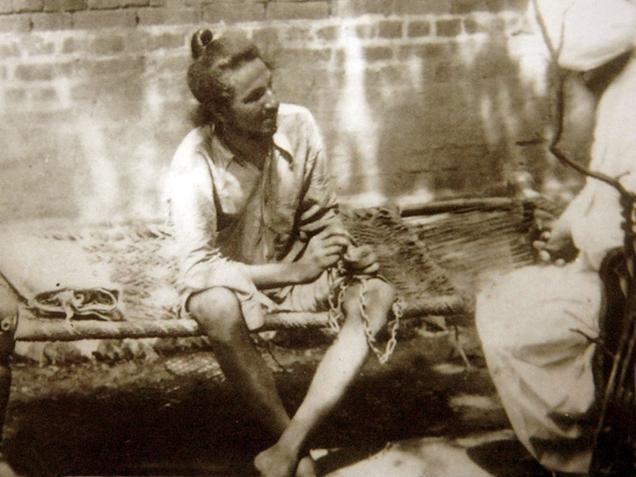
"Handcuffed and beaten, Bhagat Singh added a new dimension to his courage when he resorted to a hunger strike in prison asking the ‘Lahore prisoners’ to be treated as political prisoners, not ‘common criminals’." Photo: The Hindu Archives

On Bhagat Singh’s death anniversary, the Congress should pause and reflect on how his political thought informed its agenda. Inspiration from the 1931 Bhagat Singh-inspired Karachi Resolution could help the party understand the magnitude of its challenge today

Eighty-five years ago this day, March 23, 1931, Gandhi and Sardar Vallabhbhai Patel were on a train from Delhi to Karachi. They were going to the seaport city to attend the Congress’s annual session. Every such session used to be memorable but the Karachi Congress was to be more than memorable, it was going to be momentous.

The Gandhi-Irwin accord, by which Congress was to call off “civil disobedience” in return for the release of all satyagrahi prisoners, had been reached only a few days earlier following a fortnight of intense parleying between Gandhi and the Viceroy, Lord Irwin. Satyagrahis were to be released from jail, salt was to be freed for collection in coastal areas, and forfeited lands were to be returned. And at the upcoming Round Table Conference in London, Gandhi was to speak for the Congress’s goal of Swaraj. The nation was fairly thrilled by all this because the pact had, for the first time, brought Gandhi and the Viceroy, the Congress and the Raj on a par.

As the train sped Gandhi and Patel towards Karachi, they must have been preoccupied with thoughts on the work ahead at the session where the younger Gujarati was to take over from Jawaharlal Nehru as Congress president and where Nehru was to present a draft resolution on the Congress’s major goals for Swaraj.

Gandhi was 61 at the time, Patel 55 and Nehru 41. The first two were not quite ‘old’ yet, the third was still young. But a fourth Indian, not inching towards Karachi, not a Congressman, not a satyagrahi, no Gandhian, Patelite or Nehruvian, had in the meantime burst upon the political imagination of India like a blinding meteor, dimming the sparkling asterisms of the Congress.

Date with the gallows

Bhagat Singh at 23, younger than young, brave, thoughtful, wise beyond his years, on the morning of March 23, 1931 in his cell in Lahore Jail, had been in custody for nearly a year, facing trials with fellow revolutionaries from the Hindustan Socialist Republican Association including Shivaram Rajguru and Sukhdev Thapar, for the killing of Lahore’s Assistant Superintendent of Police John Saunders on December 17, 1928 and for “waging war against the King”. This last charge came from Bhagat Singh’s throwing, with Batukeshwar Dutt, bombs and leaflets into the Central Legislative Assembly chambers in New Delhi on April 8, 1929.

Handcuffed and beaten, Bhagat Singh added a new dimension to his courage when he resorted to a hunger strike in prison asking the ‘Lahore prisoners’ to be treated as political prisoners, not ‘common criminals’. Among the voices raised to protest against the mistreatment of the Lahore heroes was that of Mohammed Ali Jinnah. Speaking in the Central Assembly on September 12, 1929, his salty, satiric voice said: “Bhagat Singh is not asking for spring mattresses or dressing tables… the man who goes on hunger strike has a soul. He is moved by that soul, and he believes in the justice of his cause. He is no ordinary criminal… guilty of cold-blooded, sordid, wicked crime.”

Once the death sentence was passed, Irwin blocked all appeals for clemency and commutation, including that from Gandhi. The same panic led to Bhagat Singh’s date with the gallows being advanced from the dawn of March 24 to the still darkness of the night of March 23. It is said Bhagat Singh walked to the scaffold, head held high, with the slogan ‘Inquilab Zindabad’ on his lips. Also, that he kissed the noose as it was lowered to his head. What is known is that empowered magistrates declined to supervise the execution and an honorary judge was asked to fill in. The three bodies were then hurriedly and secretly cremated and the ashes taken furtively in the night and lowered into the Sutlej near Ferozepur.

A defining presence in absentia

Bhagat Singh played, in the hours and days after his hanging, a role that history has not recognised, acknowledged or learnt from. Quite incredibly, Bhagat Singh’s became the most important ideational presence at the Karachi Congress, virtually dictating its agenda and defining the draft resolution which Nehru put together and Gandhi edited. Bhagat Singh was, in effect, Congress president at that session.

Gandhi said through the Karachi Congress and later that he deplored the cult of assassination and political violence. It has to be said for the ideological integrity of the Congress of the day that it began its resolution “… disassociating itself from and disapproving of political violence in any shape or form”. But it is also to the credit of the Congress’s sensitivity of the national mood that it deplored the triple executions “… as an act of wanton vengeance and a deliberate flouting of the unanimous demand of the nation for commutation”.

Of far greater significance than the Karachi Congress’s solidarity with Bhagat Singh’s person was the Congress’s bonding with Bhagat Singh’s political thought. The resolution on India’s future under a scheme of Fundamental Rights and Duties that Nehru drafted, we know from Nehru’s own notes on it, was edited by Gandhi. But it was also unmistakably influenced by Bhagat Singh. A couple of examples suffice to show this.

In a statement issued by him with Batukeshwar Dutt dated June 6, 1928, Bhagat Singh had said: “… labourers and producers, despite being part of the mainstream, are victims of exploitation and have been denied basic human rights… Farmers, who produce, die of hunger. The weaver who weaves clothes for others cannot do so for his own family and children… Masons, carpenters, ironsmiths who build huge palaces die living in huts and slums. On the other side, capitalist exploiters, anti-social elements, spend crores of rupees on their fashion and enjoyment…”

Nehru’s Karachi text began with: “This Congress is of the opinion that in order to end the exploitation of the masses, political freedom must include real economic freedom of the starving millions.” And his Resolution, as further refined by the All India Congress Committee, went on to give under paragraphs titled ‘Labour’, and ‘Taxation & Expenditure’, the goals: “… Labour to be freed from serfdom and conditions bordering on serfdom… Peasants and workers shall have the right to form unions to protect their interest… giving relief to the smaller peasantry…”

In Why I am an Atheist (October 5-6, 1930) Bhagat Singh had written: “The day shall usher in a new era of liberty when a large number of men and women, taking courage from the idea of serving humanity… will wage a war against their oppressors, tyrants or exploiters… to establish liberty and peace.” A major Karachi Congress formulation read: “Every citizen of India has the right of free expression of opinion, the right of free association and combination, and the right to assemble peacefully and without arms, for a purpose not opposed to law or morality.”

Karachi’s resolutions, it is so clear, refracted themselves into the Preamble to the Constitution of India and its chapter on Fundamental Rights. To that extent Bhagat Singh was, in his permeating influence, an in-absentia member of the Constituent Assembly’s Drafting Committee.

There can be no doubt that Bhagat Singh’s execution led to the Karachi Resolution saying under ‘Fundamental Rights’: “There shall be no capital punishment.” That was a Congress resolution, a Congress resolve. As the population in India’s death rows teems with men and women convicted not just for ‘plain murder’, but assassinations and ‘waging war against the state’, and as sedition is invoked to smother dissent in ways that would make Lord Irwin look evangelical, let the Congress give up ambiguity on capital punishment and say that those sentenced to death in the Rajiv Gandhi assassination case, having spent a quarter of a century in jail for indirect involvement, should not hang. But beyond the matter of ‘to hang or not to hang’, let the Congress address the coarseness that has crept into our criminal investigation and prison systems, with the third degree, surveillance, and random arrests becoming routine. Bhagat Singh moved Nehru’s pen in Karachi. He can charge Congress’s laptops today.

The lessons from 85 years ago

As in 1931, so also in 2016, the Congress is not in power in Delhi. It has played the role of an alert opposition in some crucial ways, with fortitude and success. But being a strong opposition party is one thing, being a tribune of the people is another. The Karachi resolutions of 1931 are there, in black and white, for it to turn to for guidance, for inspiration.

The Karachi resolve, “…the State shall own or control key industries and services, mineral resources, railways, waterways, shipping, and other means of public transport”, is an orphan today. Where does the Congress stand on the disinvestment of national assets? Where does it stand on the behemoth of monopoly control over India’s mineral resources, legal and illegal?

Likewise, what does the Congress plan to do, in these self-defining times, on the Karachi resolve to give “…protection against the economic consequences of old age, sickness and unemployment”? It has been left to individuals like Prabhat Patnaik and movements like those led by Aruna Roy to fight for a universal pension in India. Cannot the Congress bestir itself on something as basic as that? Karachi has mandated it to.

“Labour to be freed from serfdom and conditions bordering on serfdom” was a Karachi resolve. Migrant labour is India’s grimmest reality. It is a fluid serfdom, a floating servitude.

Can India, on the eve of elections to several States, expect from Congress a testament as foundational to its future as a Democratic Republic as its 1931 Bhagat Singh-inspired Resolution was for the attainment of Swaraj?

(Gopalkrishna Gandhi is Distinguished Professor of History and Politics, Ashoka University.)

courtesy : http://www.thehindu.com/opinion/lead/return-to-the-revolutionary-road/article8386162.ece?homepage=true

Loading

My Memories As An Indian MP

Mani Shankar Aiyar|English Bazaar Patrika - Features|23 March 2016

I write this on my last day as a Member of Parliament. I first became an MP in 1991. Over the last 25 years, I have been thrice elected to the Lok Sabha (1991-96, 1999-2004, 2004-2009) and most lately (2010-2016) served as a nominated Member of the Rajya Sabha.

It has been a tumultuous 25 years, with many ups and downs, many unexpected twists and turns, many gifts of destiny and some cruel blows of fate. I have, in effect, been a leaf in the wind: when the wind has blown in the right direction, I have been lifted up towards the sky; when the wind has fallen, I have sunk low towards the ground.

My acquaintance with parliament is, however, more than half a century long. I first went there as an 18-year old college student; then as Private Secretary to a minister, Dinesh Singh; then fairly frequently as a Joint Secretary in the Ministry of External Affairs; and then pretty regularly as Joint Secretary to Prime Minister Rajiv Gandhi. This moment of parting is, therefore, perhaps a fitting opportunity to share some moments from the past.


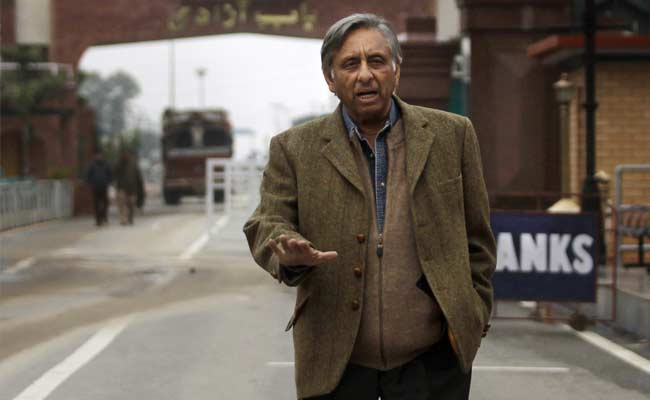
Senior Congress Party leader Mani Shankar Aiyar is seen at the joint India-Pakistan border crossing of Wagah, near Amritsar. (AP Photo)

The most vivid of these is my first visit. The Congress had just ejected from office in Kerala, the first ever democratically-elected Communist government in world history. Rooted to my bench in the Visitors' Gallery, I heard Comrade SA Dange tear into Prime Minister Jawaharlal Nehru for this act of perfidy. In his peroration, Dange recalled the story from the Mahabharata of Yudhishtra, whose chariot rode above the ground in recognition of his unique attribute of always speaking the truth. The Pandavas had conspired with Lord Krishna to kill an elephant called Ashwathama, which had the same name as Dronacharya's beloved son. They then persuaded Yudhishtra to call out in the midst of battle, "Ashwathama is dead". He agreed, subject to adding sotto voce – "the elephant". In the din of war, Dronacharya only heard "Ashwathama athaha" – not "kunjeraha". In utter shock, the formidable warrior dropped his weapons. But because Yudhishtra had uttered a white lie, his chariot immediately fell to the ground. Turning on Nehru, Dange thrust in his verbal dagger – that till now, the wheels of the chariot of Nehru the Democrat had been riding in the air but, like Yudhishtra's for uttering a white lie, had, after the happenings in Kerala, fallen to the ground.

The House heard him out in total, if stunned, silence. There was none of the barracking and noisy interruptions that have now come to characterize our proceedings. Panditji rose to his feet and, with great dignity, began his reply. It was then and there that I decided I must make it one day to the floor of the House. But there was nothing I did, or could do, to bring that about. It happened entirely because of the benign benediction of Rajiv Gandhi.

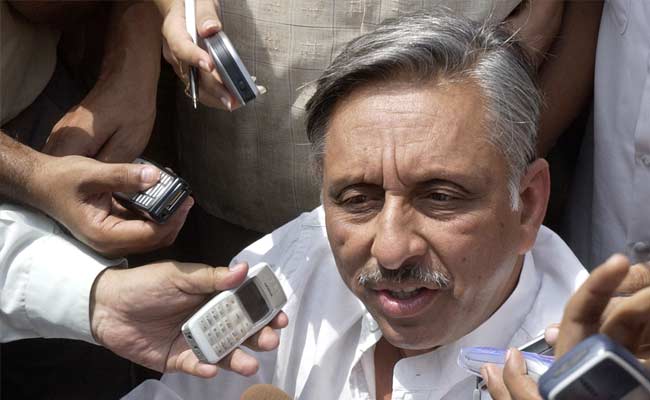
Senior Congress Party leader Mani Shankar Aiyar speaks to the media. (AP Photo)

Reluctant though he was to accede to my request, after months of relentless persuasion and seeing how adamant I was, Rajiv eventually agreed on the eve of the 1989 general election to let me resign from the Indian Foreign Service and inducted me into the party. He stressed, however, that the "system" would never accept me because it had neither accepted outsiders like Arun Singh nor even Arun Nehru. Moreover, he added, he could never make me a minister. I said it was enough if he helped me into parliament.

That is where Destiny took matters in hand. The relatively young Congress MP for Mayiladuturai in Tamil Nadu, Pakeer Mohammed, suddenly died in a diabetic coma. I sought a ticket to replace him. Rajiv was astonished as he thought I was angling for a Rajya Sabha seat. He was right in assuming there would be tremendous objection from the Tamil Nadu Congress Committee to my being helicoptered into their territory. The immensely powerful GK Moopanar made the argument that I could not possibly win. I am told that in the Parliamentary Board it was PV Narasimha Rao who came to my rescue saying, "Then, let him lose. In politics, you have to learn both to win and lose. Let him begin by learning to lose."

Thus, on the assurance that I would lose, I was given the Congress ticket. In the event, I won by over 1.5 lakh votes. But that too had nothing to do with me. I won because I suffered the worst loss of my political life: Rajiv Gandhi was assassinated on his way to my constituency. I was carried to victory on the sympathy wave that swept the state – but was then left on uncharted seas to make my way without the oar on which I had depended to keep me afloat.

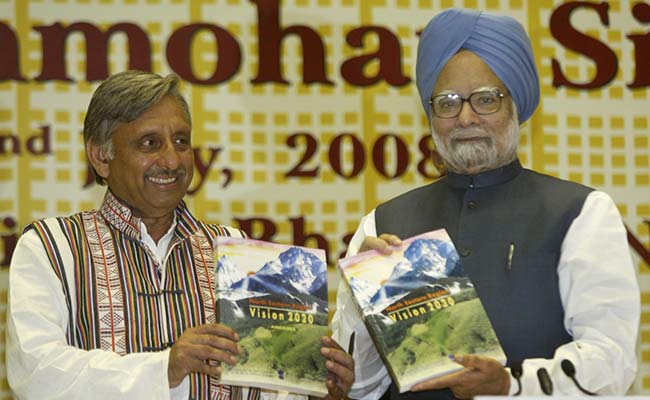
Then Prime Minister Manmohan Singh (right) with senior Congress party leader Mani Shankar Aiyar releasing 'Vision Document 2020 for the North-Eastern Region' in New Delhi in 2008. (AP photo)

I lost my next election in 1996 by the same margin that I had won the first one five years earlier. We were just in the wrong alliance in Tamil Nadu. The wind had fallen and with it the leaf. Then in late 1997, I had a falling out with the Congress president, Sitaram Kesri, which led to my joining Mamata Banerjee as a founder-Member of the Trinamool Congress. That lasted only a few weeks because I found myself a complete outsider in her little group. So, I quit Kolkata to fight and lose in 1998 yet another election in Mayiladuturai as an Independent. But with Sonia Gandhi's grace, despite significant opposition from sections of the party leadership, I was accepted back into the Congress a few weeks later when she took over the party's reins.

It was during that time – 1999 – that the Kargil war broke out. Researching for a column, I came across a fascinating little tit-bit in a dog-eared copy of The Hindustan Times datelined 26 October 1962, bang in the middle of the India-China war. The tiny news item said the leader of a small opposition party, the 36-year old Atal Behari Vajpayee, had called on Prime Minister Nehru to demand that the Rajya Sabha be summoned to discuss the course of the war. Nehru immediately agreed. Within a fortnight, on 8 November 1962, with war clouds hanging in the air, the Rajya Sabha met – and Vajpayee lashed out at the Prime Minister of the day. That was parliamentary democracy at its best.

Reminding Vajpayee of this, I sought through my fortnightly column in The Indian Express to reinforce the Congress demand that the Rajya Sabha be convened to discuss the Kargil war. Prime Minister Vajpayee declined. That was how far standards had fallen between Nehru circa 1962 and Vajpayee circa 1999.

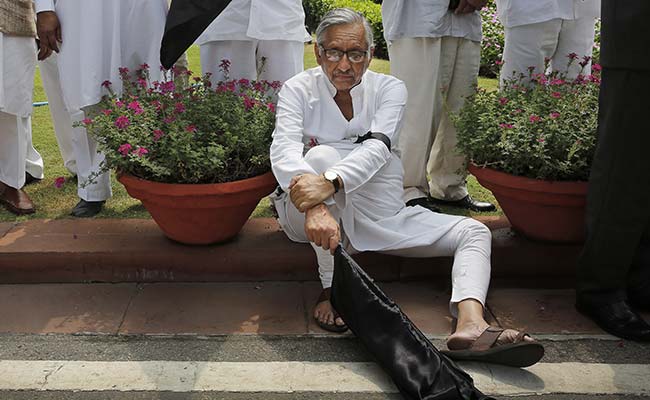
Mr Aiyar protesting with other lawmakers in August, 2015 after the Lok Sabha Speaker suspended 25 members of the Congress for five days for causing "grave disorder" in Parliament. (AP photo)

Later that year, 1999, I was re-elected to the Lok Sabha as one of only two Congressmen from Tamil Nadu to make it to parliament, and followed that up with a smash win of nearly two lakh votes in the 2004 polls. I would give the credit for that win to our partners, the DMK. I was taken into the cabinet, entrusted with four different portfolios and honoured by the Rashtrapati with the Outstanding Parliamentarian Award for 2006. The wind was riding high. But then I let the side down when I lost – albeit by a small margin – in 2009.

Compared to the first parliament I had served in, the Tenth, by the time I returned to the House in 1999 for the Thirteenth Lok Sabha, pandemonium was beginning to dominate the proceedings. It only grew worse as the years rolled by and reached their nadir when the BJP found themselves defeated twice in a row, in 2004 and again in 2009. Where, in 2000, on the occasion of the 50th anniversary of our Constitution, I had heard Vajpayee repenting that in his day, Opposition MPs would walk out to express their disapproval, they were now beginning to walk in – to the Well of the House – to protest. By 2009, he was too ill to guide the BJP any further, and so the BJP began the dreadful practice of disrupting the House day after day, session after session. Other parties were quick to follow suit. It was at that juncture that, in 2010, I re-entered Parliament in the Rajya Sabha. Entire sessions were abandoned. Legislation, if passed, was often passed without due consideration. Decorum was thrown to the winds. The Chair was mocked and disregarded. Demonstration took precedence over debate. We have now reached the stage where the foundations of the very temple of democracy are being undermined.

There is no point in apportioning the blame – kyonki hamam mein sab nange hain. Something has to be done to restore parliament to its primacy in the consideration of national affairs. The rules have to be re-written to take account the changing social composition of parliament and the fractured nature of our polity, recognizing the harm we do ourselves by prioritizing slogan-shouting on transient issues over sustained debate on matters of enduring national importance.

I leave parliament with a disquieting sense of despair. When the House is in session, the quality of debate is often as good as the best in the world. Can we sustain those standards? I doubt it – but hope and pray we will.

(Mani Shankar Aiyar is former Congress MP, Rajya Sabha.)

courtesy : http://www.ndtv.com/opinion/my-memories-as-an-indian-mp-1289748?pfrom=home-lateststories

Loading

...102030...3,6763,6773,6783,679...3,6903,7003,710...

Search by

Opinion

  • તમાકુ ને પ્લાસ્ટિક : સઘળું ઇલાસ્ટિક !
  • યુદ્ધોન્માદી માહોલ, વસમા પાડોશી અને સંરક્ષણ બજેટ
  • શું ભારતની પ્રજા આવું કરી કે સહી શકશે?
  • સોશિઅલ મીડિયા એન્ટિ-સોશિઅલ છે…?
  • અમેરિકાના હાલ બેહાલ, હાથનાં કર્યા હૈયે વાગ્યાઃ વૈશ્વિક મહાસત્તાનો આત્મવિશ્વાસ જ આત્મઘાતક બન્યો

Diaspora

  • યુ.કે.માં ડ્રાઇવિંગની પરીક્ષા
  • અમીના પહાડ (1918 – 1973) 
  • છ વર્ષનો લંડન નિવાસ
  • દીપક બારડોલીકરની પુણ્યતિથિએ એમની આત્મકથા(ઉત્તરાર્ધ)ની ચંદ્રકાન્ત બક્ષીએ લખેલી પ્રસ્તાવના.
  • ગાંધીને જાણવા, સમજવાની વાટ

Gandhiana

  • આંતરિક શક્તિ : હિંમત, અંતરાત્માનો અવાજ અને અહિંસક પ્રતિકાર 
  • માનવતાવાદી ત્રિપુટીને સ્મરણાંજલિ 
  • ગાંધી ‘મોહન’માંથી ‘મહાત્મા’ બન્યા, અને આપણે?
  • ગાંધીહત્યાના પડઘા: ગોડસેથી ગોળવલકર સુધી …
  • ગાંધીની હત્યા કોણે કરી, નાથુરામ ગોડસેએ કે ……? 

Poetry

  • ગઝલ
  • વિધ્વંસ
  • કવિ
  • ગઝલ
  • ગઝલ

Samantar Gujarat

  • ઇન્ટર્નશિપ બાબતે ગુજરાતની યુનિવર્સિટીઓ જરા પણ ગંભીર નથી…
  • હર્ષ સંઘવી, કાયદાનો અમલ કરાવીને સંસ્કારી નેતા બનો : થરાદના નાગરિકો
  • ખાખરેચી સત્યાગ્રહ : 1-8
  • મુસ્લિમો કે આદિવાસીઓના અલગ ચોકા બંધ કરો : સૌને માટે એક જ UCC જરૂરી
  • ભદ્રકાળી માતા કી જય!

English Bazaar Patrika

  • My mother cries on the phone’: TV’s war spectacle leaves Indians in Israel calming frightened families
  • “Why is this happening to me now?” 
  • Letters by Manubhai Pancholi (‘Darshak’)
  • Vimala Thakar : My memories of her grace and glory
  • Economic Condition of Religious Minorities: Quota or Affirmative Action

Profile

  • તપસ્વી સારસ્વત ધીરુભાઈ ઠાકર
  • સરસ્વતીના શ્વેતપદ્મની એક પાંખડી: રામભાઈ બક્ષી 
  • વંચિતોની વાચા : પત્રકાર ઇન્દુકુમાર જાની
  • અમારાં કાલિન્દીતાઈ
  • સ્વતંત્ર ભારતના સેનાની કોકિલાબહેન વ્યાસ

Archives

“Imitation is the sincerest form of flattery that mediocrity can pay to greatness.” – Oscar Wilde

Opinion Team would be indeed flattered and happy to know that you intend to use our content including images, audio and video assets.

Please feel free to use them, but kindly give credit to the Opinion Site or the original author as mentioned on the site.

  • Disclaimer
  • Contact Us
Copyright © Opinion Magazine. All Rights Reserved